Products need not be user centered

Putting the user first has always been the golden rule in design. It’s so common that nobody really questions it anymore. We’re told, ‘The user knows best. Listen to them.’
I’ve had my skepticism about the framing of the term — user-centered design. I’ve kept myself from voicing this apprehension, afraid of being dismissed as an outright blasphemy in the design circles. However, having shifted gears from design to PM roles, I feel more comfortable expressing a spicy hot take that — Products need not always be user-centered.
So what’s the problem here with user-centered design?
Imagine you’re crafting a product for Michael Johnson, a fictional character representing the ‘average’ user: a 38-year-old IT project manager juggling work and family life. This approach, while seemingly comprehensive, inadvertently overlooks the diverse spectrum of users with unique needs and preferences. This is the essence of the ‘long tail problem’ as articulated by Kasey Klimes. It states that focusing solely on the average user risks marginalizing those outside this central demographic. The product ends up serving the gaussian middle.
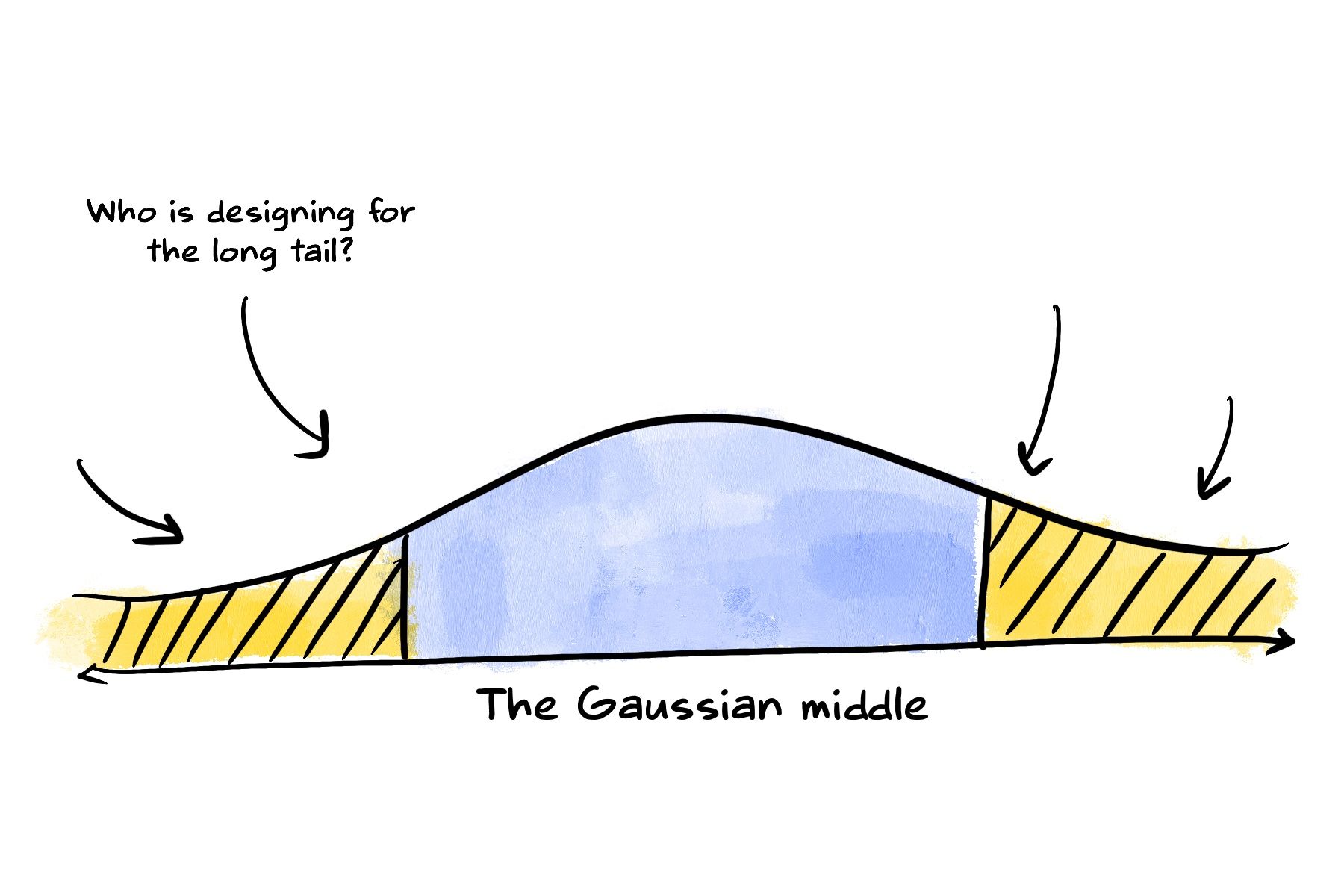
User-centered design by default tends to get optimised for the average. It implies a focus to the right profile of a user. And that’s NOT always the right approach. We just have so much variance in the users, that I sometimes wonder: how do we expand the scope of a product from the gaussian middle to the long tail?
There is a way of addressing the long-tail problem, but it requires a very different paradigm for thinking about the way we design products, tools, and services. We can call this paradigm design for emergence. — Kasey Klimes, Design for emergence
Fortunately, there is a new kid on the block — and that’s design for emergence. This concept finds its roots in Seymour Papert’s emphasis on ‘low floors’ and ‘high ceilings’ in technology. According to him, technology should be accessible for beginners (low floor) yet offer advanced users the scope for complex projects (high ceiling). Think of LEGO, with its simple yet versatile bricks, offering endless creative possibilities — that’s this philosophy brought to life.”

Low floors: could make any object with the least number of pieces. High ceiling — you could even make Optimus Prime from Transformers if you really want to
Subway is another example. A sandwich is made composable. You can choose your toppings, the patty, the sauces in a truly unique way. There is no one ‘right’ way for the ‘right’ user. There are multiple ways for multiple users. By designing products with low floors, wide walls and high ceilings, every fringe user can now use the product the way they want it. Even coffee has become ‘composable’ this way.
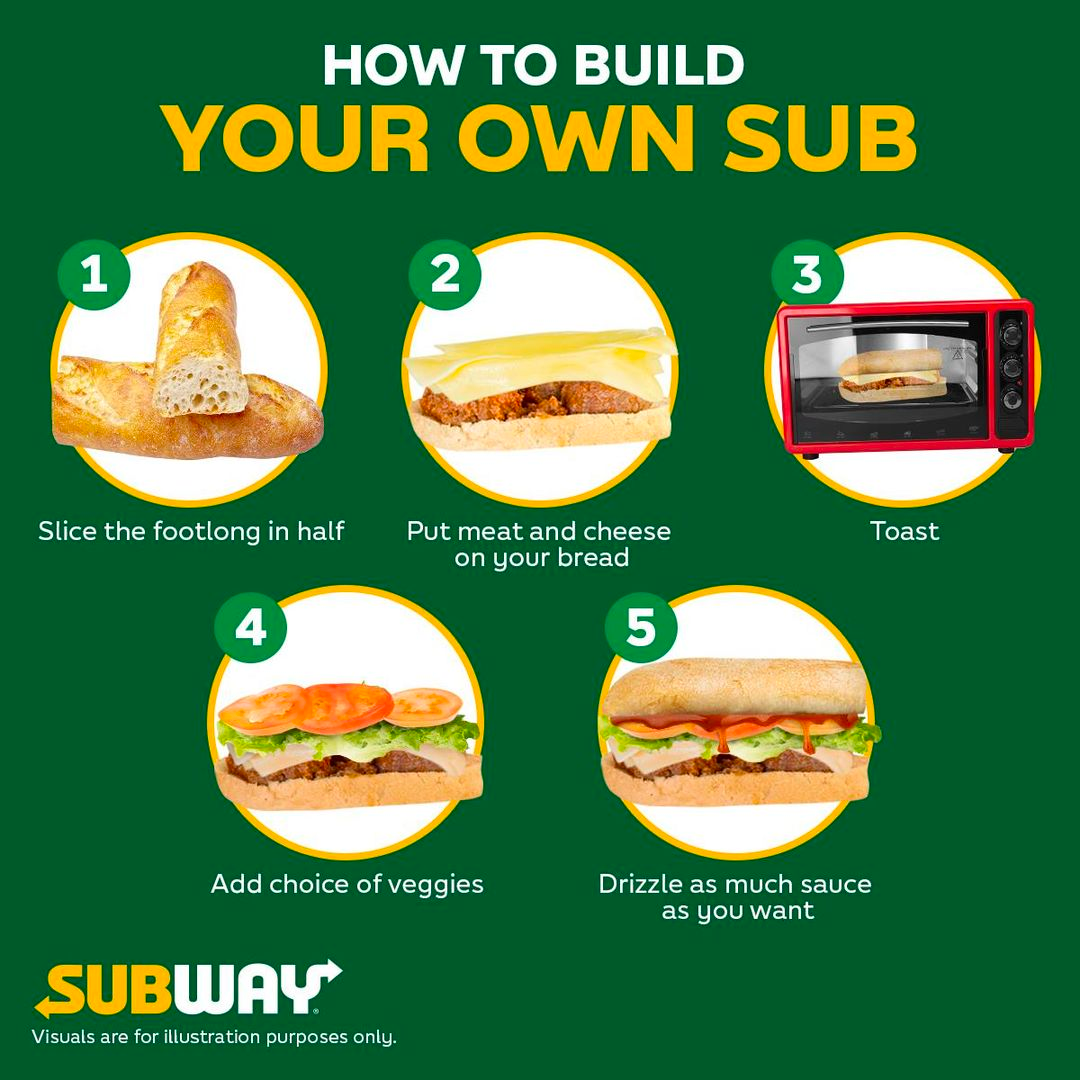
An example of how a sandwich is made composable
Designing for emergence is just that. Products with “low floors” and “high ceilings”. Let’s take a couple of digital examples where this has stood out:
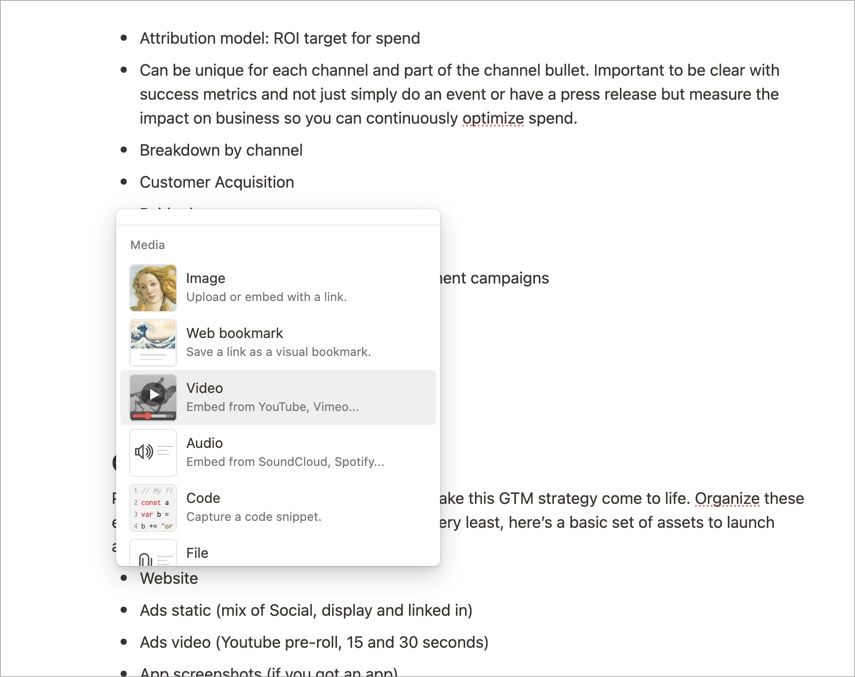
Taking Notion for example, where a document processor becomes infinitely composable through infinite ‘content blocks’.
Zapier makes automations infinitely composable through its automation blocks
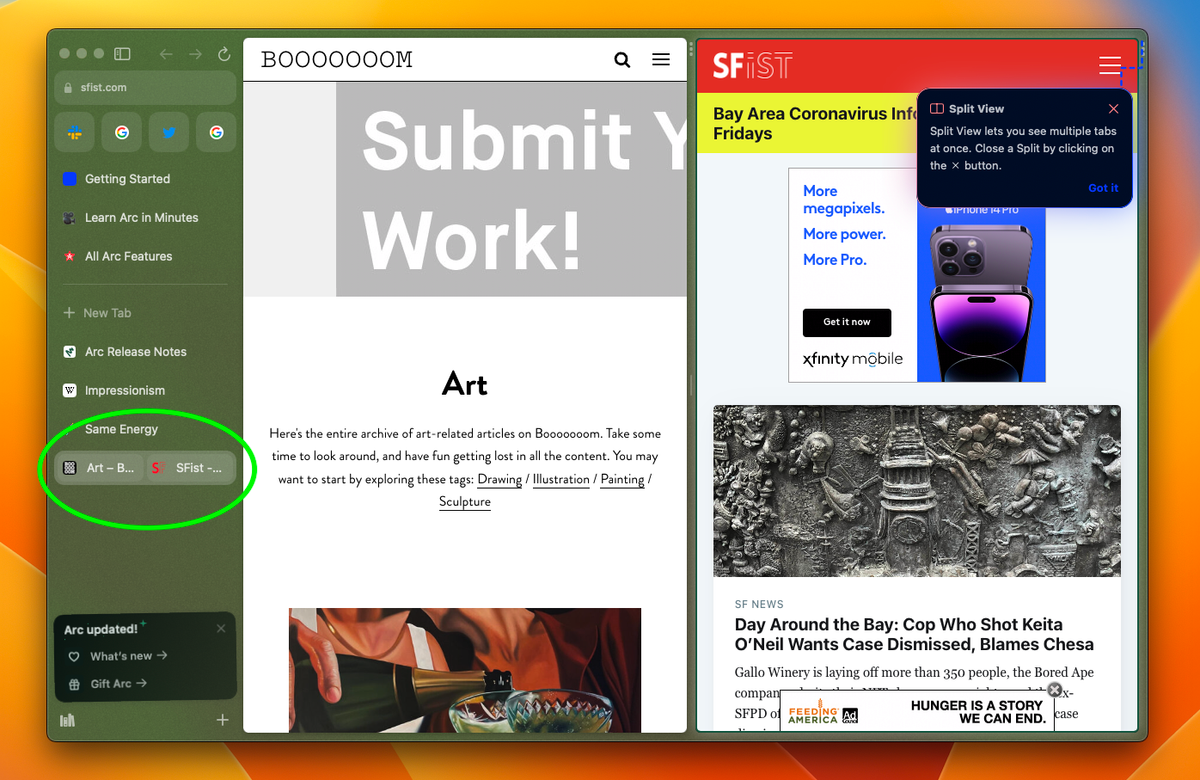
Arc makes browsers infinitely composable by providing users the ability to make multiple workspaces and customising it the way they want. They even go further providing art tools to even choose the font and styling of the user’s apps
If we classify software in terms of an axes between convention and configurability, on one extreme, you have the DIY types: like Notion built on the principle of composability through content blocks. On the upside, you see people use Notion for all kinds of purposes such as — wiki, project management, CRM, documentation etc. Notion definitely has a high ceiling. However, on the downside, it suffers from ‘too much’ composability leading to featuritis. Features keep getting added, which affects the speed, stability and performance in the core features that defines the essence of Notion (high floor)
Configuration through composability is great. But there are times when you would rather choose a full course buffet curated by a chef, than being given 100 different options to choose and customise on your own. This is where the other extreme lies. Design which chooses convention over configuration. Ruby on Rails is opinionated software, where a team of chefs have picked ingredients on our behalf. As DHH puts it, it isn’t meant to appeal to the taste of everyone, everywhere. This works great when the user doesn’t really know what to look for.
_There are lots of à la carte software environments in this world. Places where in order to eat, you must first carefully look over the menu of options to order exactly what you want…Rails is not that.
Rails is omakase. A team of chefs picked out the ingredients, designed the APIs, and arranged the order of consumption on your behalf according to their idea of what would make for a tasty full-stack framework. The menu can be both personal and quirky. It isn’t designed to appeal to the taste of everyone, everywhere.
When we, or in some cases I — as the head chef of the omakase experience that is Rails — decide to include a dish, it’s usually based on our distilled tastes and preferences. I’ve worked in this establishment for a decade. I’ve poured well in the excess of ten thousand hours into Rails. This doesn’t make my tastes right for you, but it certainly means that they’re well formed. —_ DHH on this blog.
Apparently, it’s not just DHH and Ruby on Rails, but also how Tesla was envisioned by Elon Musk:
This is how we create Tesla products
pic.twitter.com/DsmisqDGSp— Elon Musk (@elonmusk) January 3, 2024
Taking these different philosophies into account, it would be harmful to consider ‘user-centered’ design as the only way to build products. You can design products in DIY, composable ways as illustrated by LEGO and Roblox. Or in Omakase, conventional way as shown by Ruby on Rails.
Products need not always be user-centered. It can be emergent too, accomodating a varied spectrum of users to use the product.
Read more
- Home is where the feeling of home residesreflections
- Notes on doing most good, doing some good, and living goodphilanthropy
- Notes on Londontravel
- 18 key ideas from reading Henrik Karlsson this monthwriting
- Venn-diagram based decision makingmathematics
- Co-creative loops are everywheremental-models
- Life lessons and hot takes from my 30slifestyle
- Building a skill for coherent science illustrationsscience
- My agentic engineering workflow (step by step)agentic-coding
- Hammock driven developmentagentic-coding
- Peculiar ways number three fits into our funny little brainsmental-models
- AI sandwich as a defacto principle for anything agentic engineering relatedagentic-coding
- Authority in the guise of evidencecritical-rationalism
- Map is not the territoryphilosophy
- Self hypnosis as a manifestation ritualmeditation
- Hegelian dialectic for structured reasoning with AI agentsphilosophy
- How I prepare for tough negotiations nowadaysnegotiation
- When should we steelthread somethingproduct-development
- Breadboarding, shaping, slicing, and steelthreading solutions with AI agentsproduct
- Healthy conflict in teams have a tipping pointteam-building
- How I deslopify AI writingwriting
- How I started building softwares with AI agents being non technicalagentic-coding
- Read raw transcriptswriting
- Legible and illegible tasks in organisationsproduct
- L2 Fat marker sketchesdesign
- Writing as moats for humanswriting
- Beauty of second degree probesdecision-making
- Boundary objects as the new prototypesprototyping
- One way door decisionsproduct
- Finished softwares should existproduct
- How I periodically rank my rough draftsobsidian
- Flipping questions on its headinterviewing
- Vibe writing maximswriting
- How I blog with Obsidian, Cloudflare, AstroJS, Githubwriting
- How I build greenfield apps with AI-assisted codingagentic-coding
- We have been scammed by the Gaussian distribution clubmathematics
- Classify incentive problems into stag hunts, and prisoners dilemmasgame-theory
- I was wrong about optimal stoppingmathematics
- Thinking like a shipmental-models
- Hyperpersonalised N=1 learningeducation
- New mediums for humans to complement superintelligenceagentic-coding
- Maxims for AI assisted codingagentic-coding
- Virtual bookshelvesaesthetics
- It's computational everythingtrends
- Public gardens, secret routesdigital-garden
- Git way of learning to codeagentic-coding
- Style Transfer in AI writingagentic-coding
- Understanding codebases without using codeagentic-coding
- Vibe coding with Cursoragentic-coding
- Virtuoso Guide for Personal Memory Systemsmemory
- Writing in Future Pastwriting
- Publish Originally, Syndicate Elsewhereblogging
- Poetic License of Designdesign
- Idea in the shower, testing before breakfastsoftware
- Technology and regulation have a dance of ice and firetechnology
- How I ship "stuff"software
- Writing is thinkingwriting
- Song of Shapes, Words and Pathscreativity
- How do we absorb ideas better?knowledge
- Read writers who operatewriting
- Brew your ideas lazilyideas
- Trees, Branches, Twigs and Leaves — Mental Models for Writingwriting
- Compound Interest of Private Noteswriting
- Conceptual Compression for LLMsagentic-coding
- Meta-analysis for contradictory research findingsdigital-health
- Proof of workproduct
- Gauging previous work of new joinees to the teamleadership
- Task management for product managersproduct
- Beauty of Zettelswriting
- Stitching React and Rails togetheragentic-coding
- Exploring "smart connections" for note takingwriting
- Deploying Home Cooked Apps with Railssoftware
- Repetitive Copypromptingwriting
- Questions to ask every decadejournalling
- Balancing work, time and focusproductivity
- Hyperlinks are like cashew nutswriting
- Brand treatments, Design Systems, Vibesdesign
- How to spot human writing on the internetwriting
- Can a thought be an algorithm?product
- Opportunity Harvestingcareers
- Everything is a prioritisation problemproduct
- Nowlifestyle
- How I do product roastsproduct
- The Modern Startup Stacksoftware
- In-person vision transmissionproduct
- How might we help children invent for social good?social-design
- The meeting before the meetingmeetings
- Design that's so bad it's actually gooddesign
- Lessons learnt interview prepping for product rolesinterviewing
- Obsessing over personal websitessoftware
- English is the hot new programming languagesoftware
- Better way to think about conflictsrisk-management
- The role of taste in building productsdesign
- Dear enterprises, we're tired of your subscriptionssoftware
- World's most ancient public health problemsoftware
- Pluginisation of Modern Softwaredesign
- Let's make every work 'strategic'consulting
- Making Nielsen's heuristics more digestibledesign
- Startups are a fertile ground for risk takingentrepreneurship
- Insights are not just a salad of factsdesign
- Minimum Lovable Productproduct
- Methods are lifejackets not straight jacketsmethodology
- How to arrive at on-brand colours?design
- Minto principle for writing memoswriting
- Importance of Whytask-management
- Quality Ideas Trump Executionsoftware
- Why I prefer indie softwareslifestyle
- Use code only if no code failscode
- Self Marketing
- Personal Observation Techniquesdesign
- Design is a confusing worddesign
- A Primer to Service Design Blueprintsdesign
- Rapid Journey Prototypingdesign
- Visualise detailed file structures on CLIcli
- Do's and Don'ts of User Researchdesign
- Design Manifestodesign
- Complex project management for productproducts
- How might we enable patients and caregivers to overcome preventable health conditions?digital-health
- Pedagogy of the Uncharted — What for, and Where to?education
- Future of Equity with Ludovick Petersinterviewing
- Future of Ageing with Mehdi Yacoubiinterviewing
- Future of Tacit knowledge with Celeste Volpiinterviewing
- Future of Mental Health with Kavya Raointerviewing
- Future of unschooling with Che Vanniinterviewing
- Future of Rural Innovation with Thabiso Blak Mashabainterviewing
- Future of work with Laetitia Vitaudinterviewing
- How might we prevent acquired infections in hospitals?digital-health
- The why to endure any howentrepreneurship
- Design education amidst social tribulationsdesign
- How might we assist deafblind runners to navigate?social-design